✦ publish
Perks and Birch Motor Wheel 1899

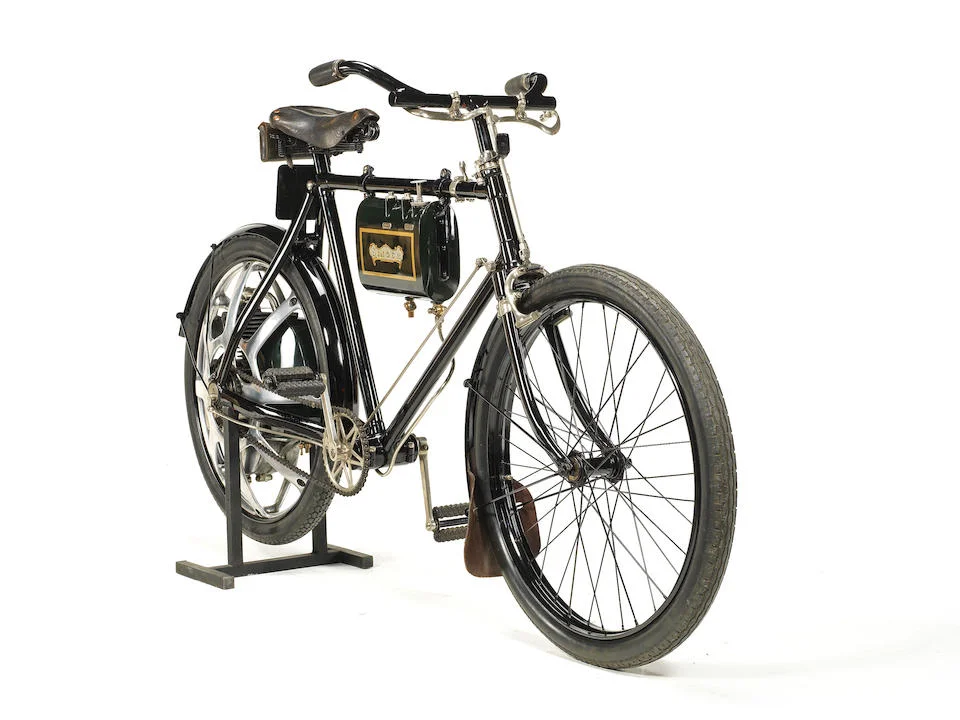
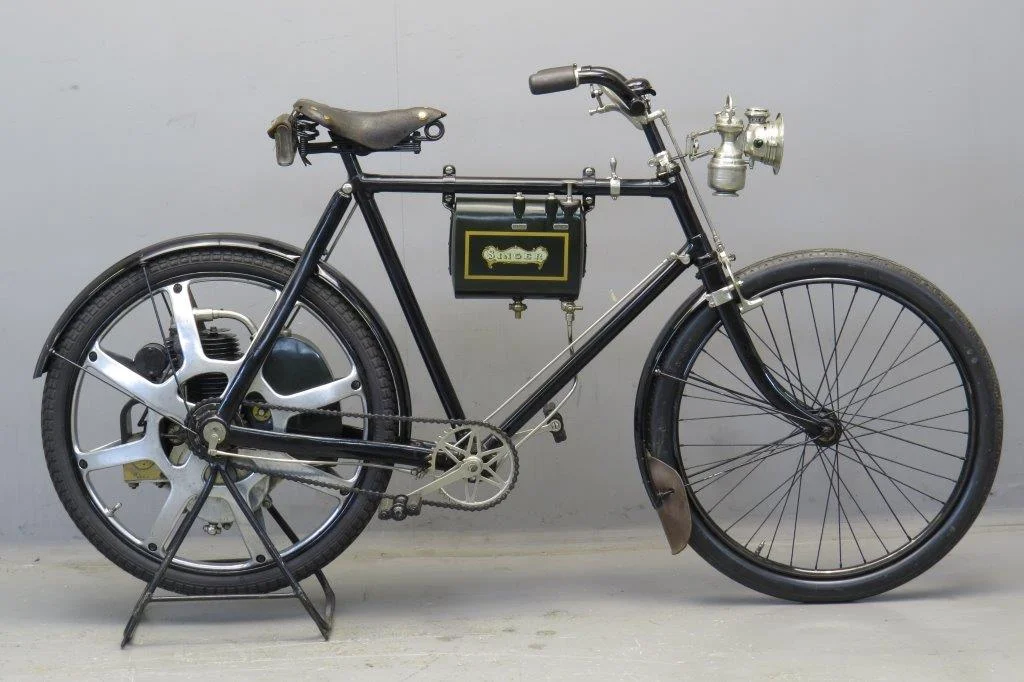
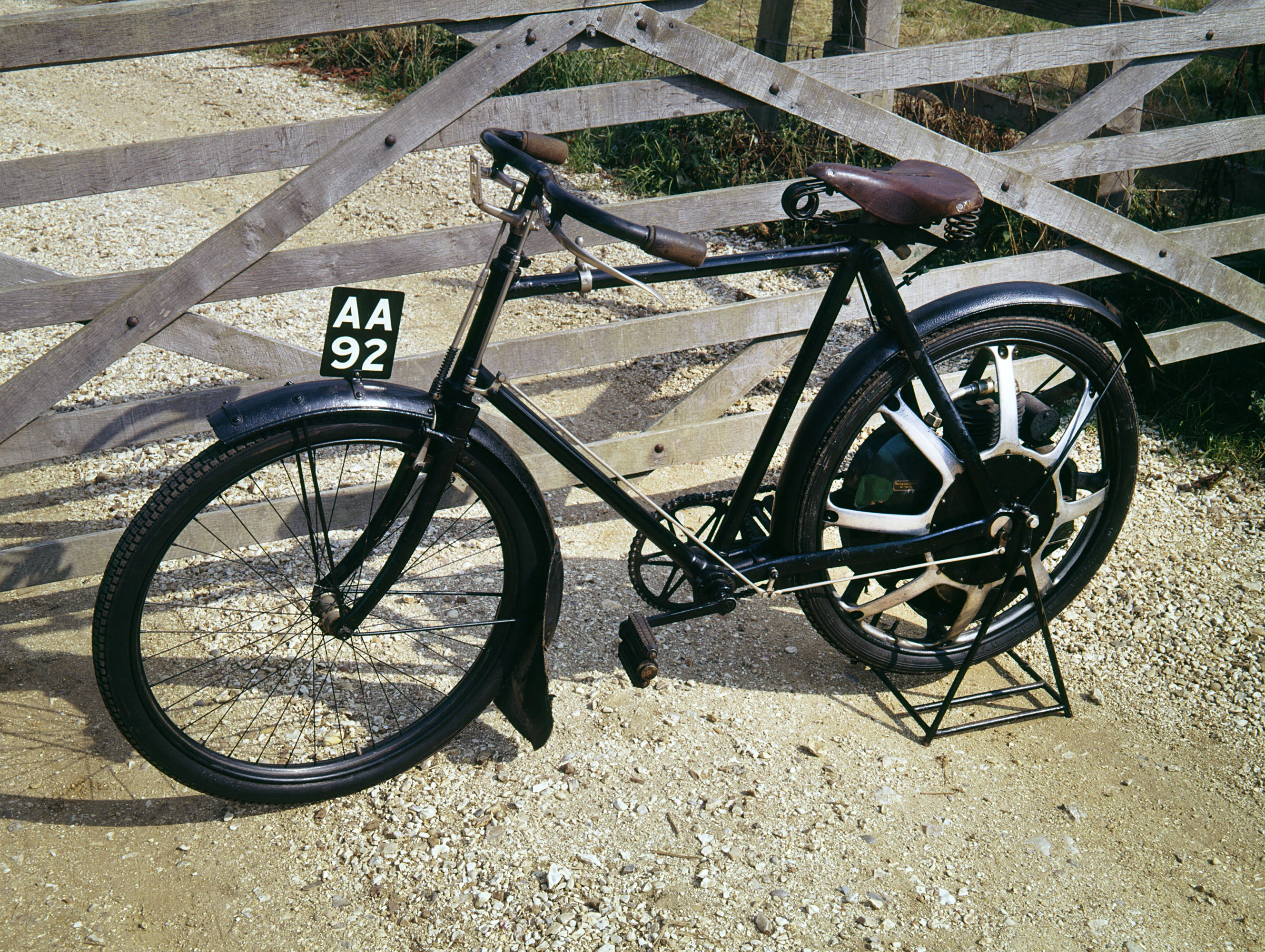
The 1899 Perks and Birch Motor Wheel represents a pivotal moment in early motorcycle development, effectively being an attachment that transformed a bicycle into a powered two-wheeler. This ingenious design placed the engine within the rear wheel itself, a concept that captivated the late 19th-century public. While not a standalone motorcycle in the modern sense, it competed directly with other early motorized bicycle conversions and nascent motorcycle designs of the era, such as the De Dion-Bouton powered tricycles and early Werner models, all vying to offer personal motorized transport.
At the heart of the Perks and Birch Motor Wheel was a modest but innovative engine. Powering this contraption was a 208.0 ccm (12.69 cubic inches) single-cylinder, four-stroke engine. This compact unit produced a peak power output of 2.0 HP (1.5 kW), a significant output for its time, enabling speeds that would have felt quite brisk compared to pedal power alone. The four-stroke design was a step towards greater efficiency and reliability compared to earlier two-stroke experiments, hinting at the future direction of internal combustion engines for motorcycles.
Riding characteristics would have been rudimentary by today's standards. The Motor Wheel's design inherently added weight to the rear of the bicycle, altering its balance. Handling would have been ponderous, and the lack of suspension meant a direct connection to every road imperfection. Comfort was likely minimal, with riders experiencing significant vibrations from the engine integrated into the wheel. The upright stance of a typical bicycle would have been maintained, with the primary focus on forward motion rather than ergonomic refinement.
The target audience for the 1899 Perks and Birch Motor Wheel was the adventurous individual seeking a novel form of personal transportation, an early adopter of mechanical locomotion. It appealed to those who valued the convenience of motorized travel over the physical exertion of cycling, and who were intrigued by mechanical innovation. As an early foray into personal motorized transport, it provided a glimpse into a future where two wheels could carry you further and faster than ever before. Its legacy lies in its contribution to the evolution of the motorcycle, demonstrating an early, albeit unique, approach to integrating power into a bicycle frame.
✅ Why buy this bike?
• Groundbreaking innovation for its era, offering a self-contained motorized bicycle concept. • Compact 208cc engine allowed for relatively lightweight integration into a bicycle frame. • Early adoption of a direct-drive system, minimizing power loss from complex transmissions. • Simplicity of design meant fewer moving parts, potentially easier for early mechanics to service. • Provided a significant speed and range advantage over purely pedal-powered bicycles. • Represented a crucial step in the evolution of motorcycles from bicycles with engines.⚠️ Things to consider
• Crude and rudimentary engine design, likely suffering from frequent mechanical failures. • Limited power output from 208cc, struggling with hills or heavier riders. • Absence of suspension made for an extremely uncomfortable and jarring ride. • Lack of effective braking systems, posing significant safety hazards for the rider. • Poor fuel efficiency due to primitive carburetor and ignition technology. • High vibrations and noise levels, making long rides unpleasant and fatiguing.The Perks and Birch Motor Wheel 1899 produces 2 HP, fitting A2 license limits (max 35 kW / 47 HP). For riders 18+.
Estimated average for 208cc class: 55-80 mpg (3.0-4.5 L/100km)
Insurance grouping for Perks and Birch Motor Wheel 1899 (208cc):
Personalised premium estimate for the Perks and Birch Motor Wheel 1899 (UK rates):
💡 Estimate based on UK market averages. For real quotes, compare on Compare the Market, MoneySuperMarket, GoCompare.
Find new and used Perks and Birch Motor Wheel 1899 listings:
💡 Third-party listings. MotoBike Info is informational only.
No comments yet. Be the first to write one!