✦ publish
Kawasaki W 1
1969

1969
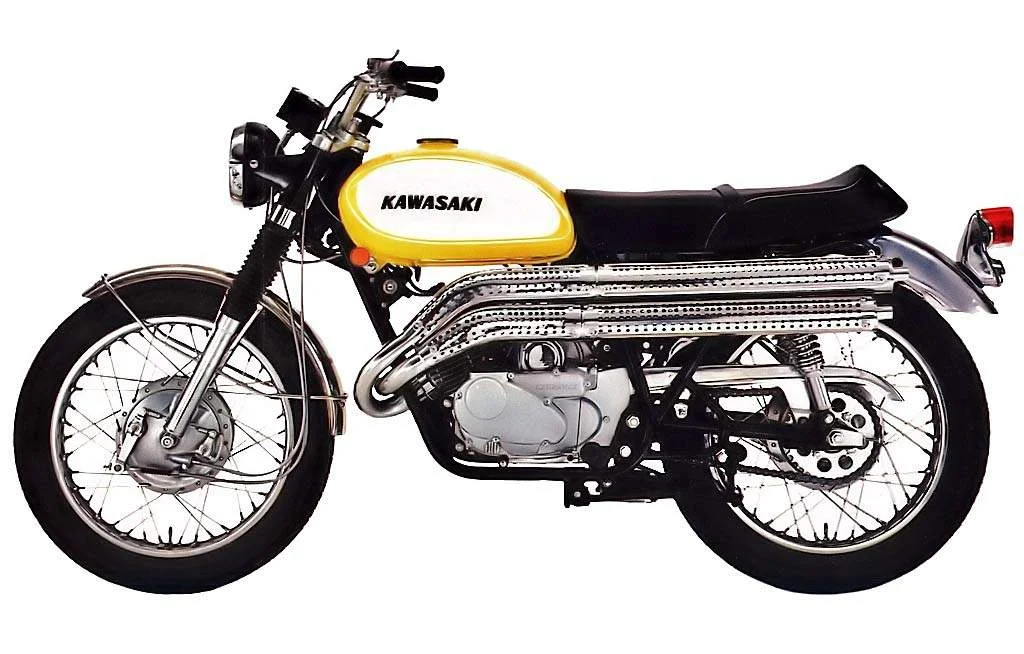
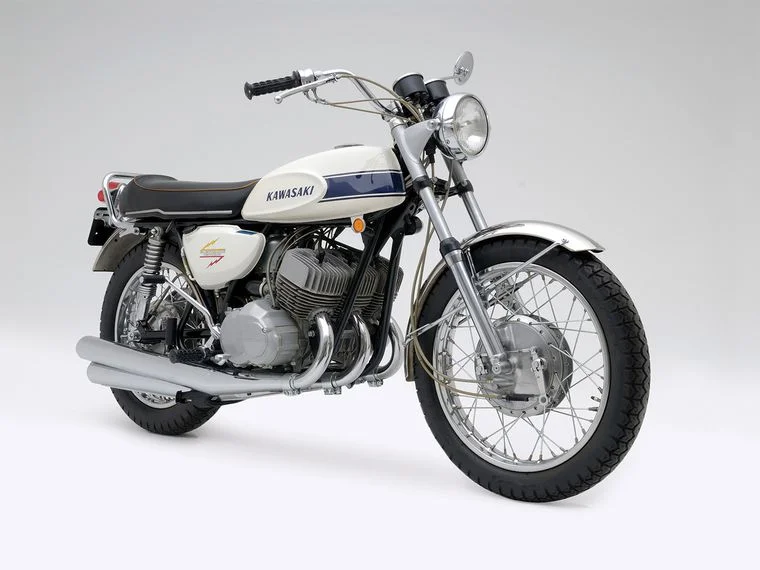
The Kawasaki W1, released in 1969, marked Kawasaki's serious entry into the large-displacement motorcycle market. Born from Kawasaki's acquisition of Meguro, the W1 was heavily influenced by the BSA A7, a popular British twin. Therefore, it directly competed with models like the Triumph Bonneville and the Norton Atlas, all vying for the attention of riders seeking a reliable and capable machine.
At the heart of the W1 lies its 624.0 ccm (38.08 cubic inches) twin, four-stroke engine. This powerplant provides adequate power for the machine's intended purpose. Kawasaki claimed a top speed of 140.0 km/h (87.0 mph), a reasonable figure for the era. The motorcycle's weight of 181.0 kg (399.0 pounds) made it manageable for most riders. The fuel tank capacity of 15.00 litres (3.96 US gallons) allowed for decent range between fill-ups, suitable for longer journeys.
The riding experience on the W1 is characterized by its comfortable, upright riding position, typical of standard motorcycles of the time. While not a sportbike, the W1 offers a pleasing ride for both short commutes and weekend trips. The suspension, while basic by modern standards, is sufficient for absorbing most road imperfections. The engine's smooth power delivery makes it easy to handle, even for less experienced riders.
The Kawasaki W1 appealed to riders seeking a dependable and stylish motorcycle with classic aesthetics. It was aimed at those who appreciated the simplicity and mechanical feel of older machines. While it may not offer the raw power of some modern motorcycles, the W1 provides a pleasant and engaging riding experience that continues to charm vintage motorcycle enthusiasts today. Its historical significance and relative rarity make it a desirable classic.
✅ Why buy this bike?
• Authentic vintage styling provides a classic, eye-catching aesthetic, appealing to enthusiasts of retro motorcycles. • Relatively simple air-cooled parallel-twin engine is mechanically straightforward, making maintenance accessible for experienced owners. • Decent fuel economy compared to larger displacement motorcycles of the era, offering reasonable running costs. • Lightweight construction and nimble handling contribute to an engaging and enjoyable riding experience in urban environments. • The W1's historical significance as Kawasaki's first four-stroke motorcycle adds to its collectibility and value. • The robust build quality, typical of Japanese motorcycles of the period, ensures durability with proper care.⚠️ Things to consider
• Limited power output compared to modern motorcycles, making it less suitable for long-distance touring or highway speeds. • Drum brakes offer less effective stopping power than disc brakes, requiring careful braking in all conditions. • Parts availability can be challenging and expensive due to the age and rarity of the motorcycle, requiring resourceful sourcing. • The electrical system is outdated, and may require upgrades for reliability and modern accessories. • Original suspension components provide a less refined ride compared to modern suspension technology.Rule of thumb: under 125cc / 15HP → A1, under 47HP → A2, above → A.
Estimated average for 624cc class: 35-50 mpg (5.0-7.0 L/100km)
⛽ Tank: 15.00 litres (3.96 US gallons)
Insurance grouping for Kawasaki W 1 (624cc):
Personalised premium estimate for the Kawasaki W 1 (UK rates):
💡 Estimate based on UK market averages. For real quotes, compare on Compare the Market, MoneySuperMarket, GoCompare.
Find new and used Kawasaki W 1 1969 listings:
💡 Third-party listings. MotoBike Info is informational only.
No comments yet. Be the first to write one!