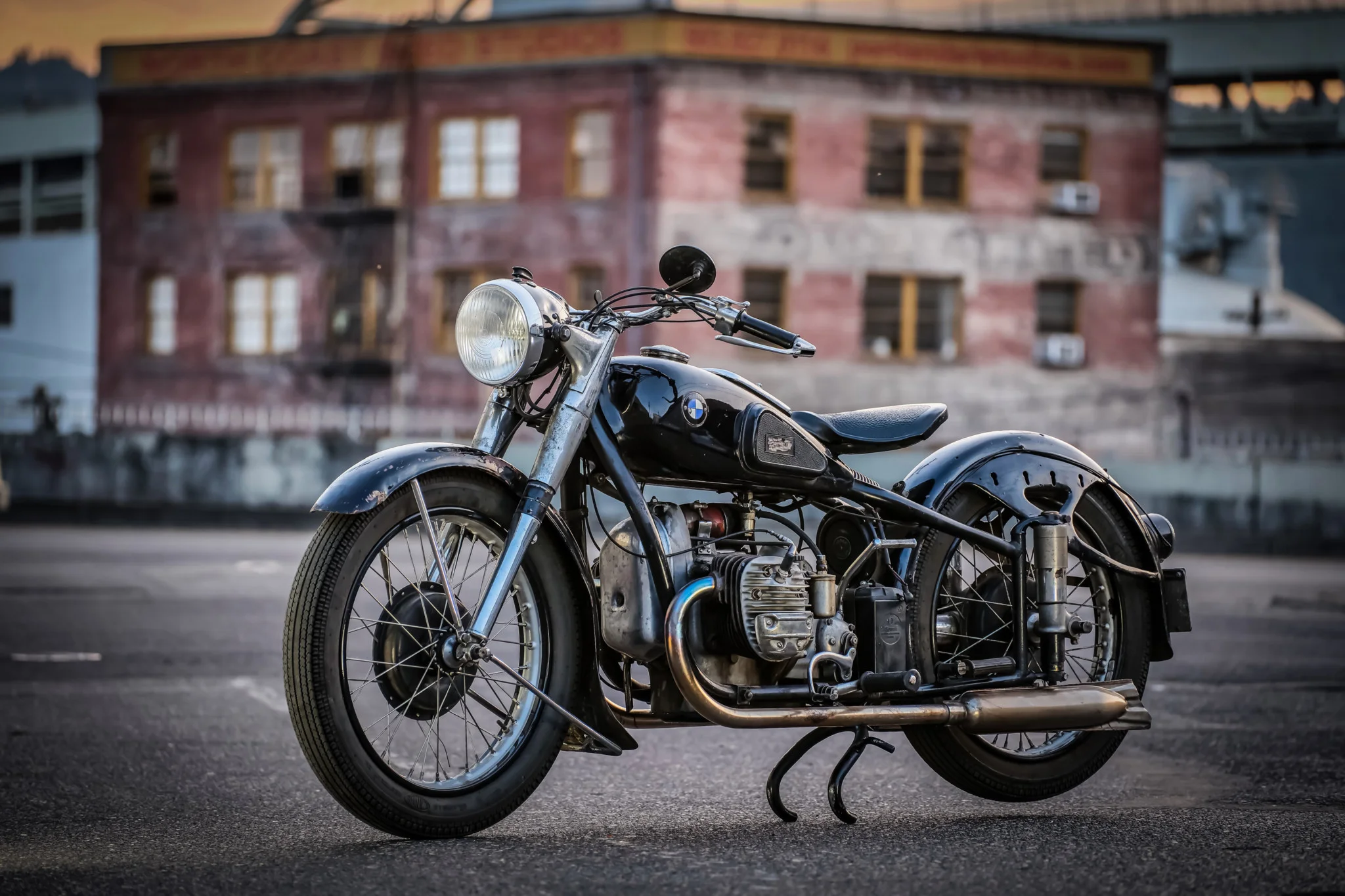
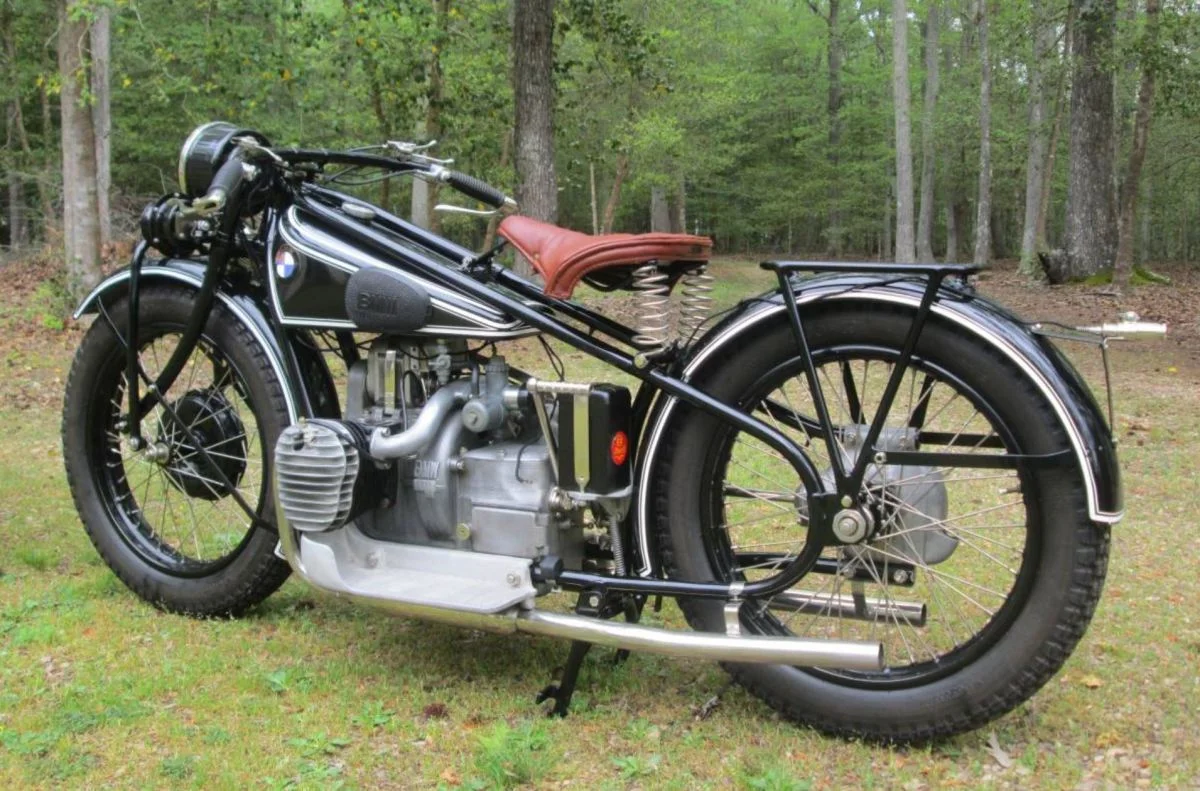
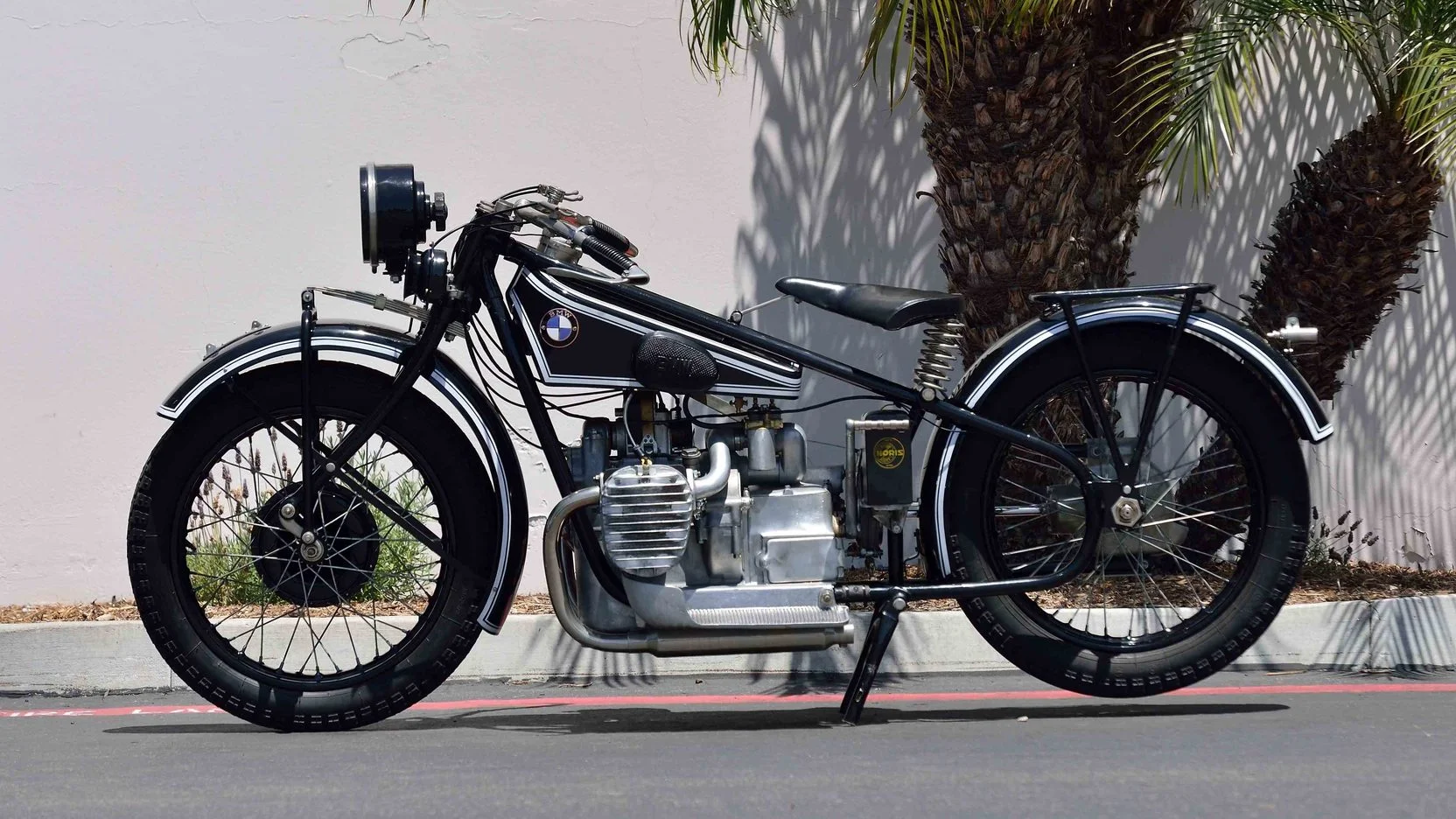
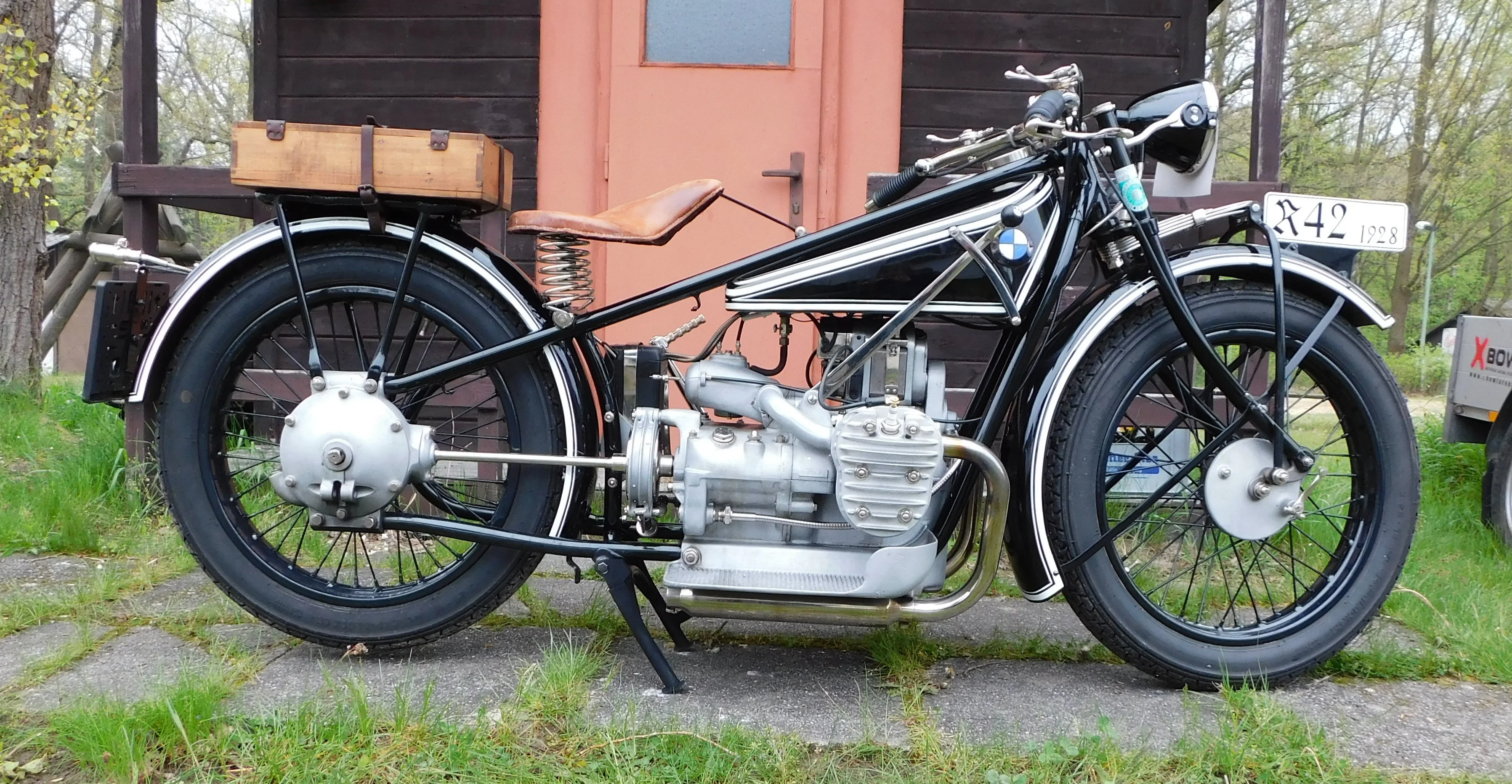
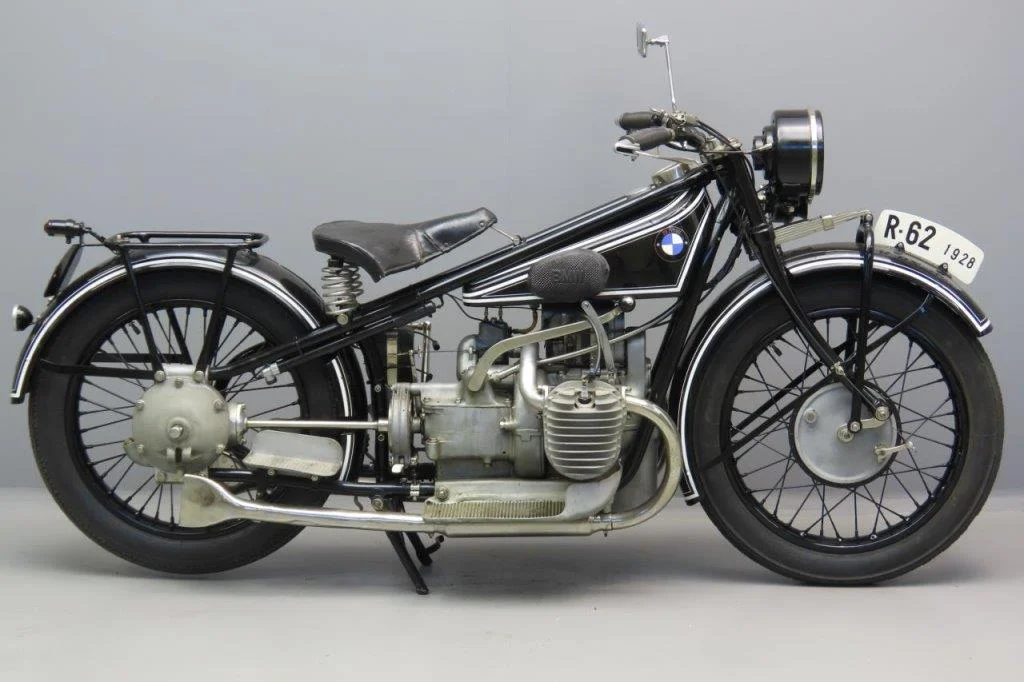
The 1928 BMW R 57 represents a pivotal moment in motorcycle history. Its 494cc engine, producing 18 horsepower at 4000 RPM, was designed for smooth, reliable performance on the roads of its time. The R 57's engine character is defined by its low-end torque, making it suitable for navigating varied terrains. With a top speed of 115 km/h (71.5 mph), it was considered a capable machine for both commuting and leisurely rides. Its 12-liter fuel tank ensured reasonable range for journeys of the era.
Ergonomically, the R 57 places the rider in an upright position, offering a comfortable experience for longer rides. The leading link front suspension was advanced for its time, providing a relatively stable ride compared to rigid forks. The expanding drum brake on the front wheel offered adequate stopping power for the motorcycle's performance capabilities. The bike's design reflects the practical considerations of early motorcycle engineering, prioritizing reliability and rider comfort.
The target rider for the 1928 BMW R 57 was someone who appreciated engineering simplicity and robustness. It appealed to those who needed a dependable means of transportation and also enjoyed the freedom of open-road riding. The R 57's blend of manageable power, comfortable ergonomics, and relatively advanced suspension made it a popular choice for both everyday use and weekend adventures.

No comments yet. Be the first to write one!