✦ publish
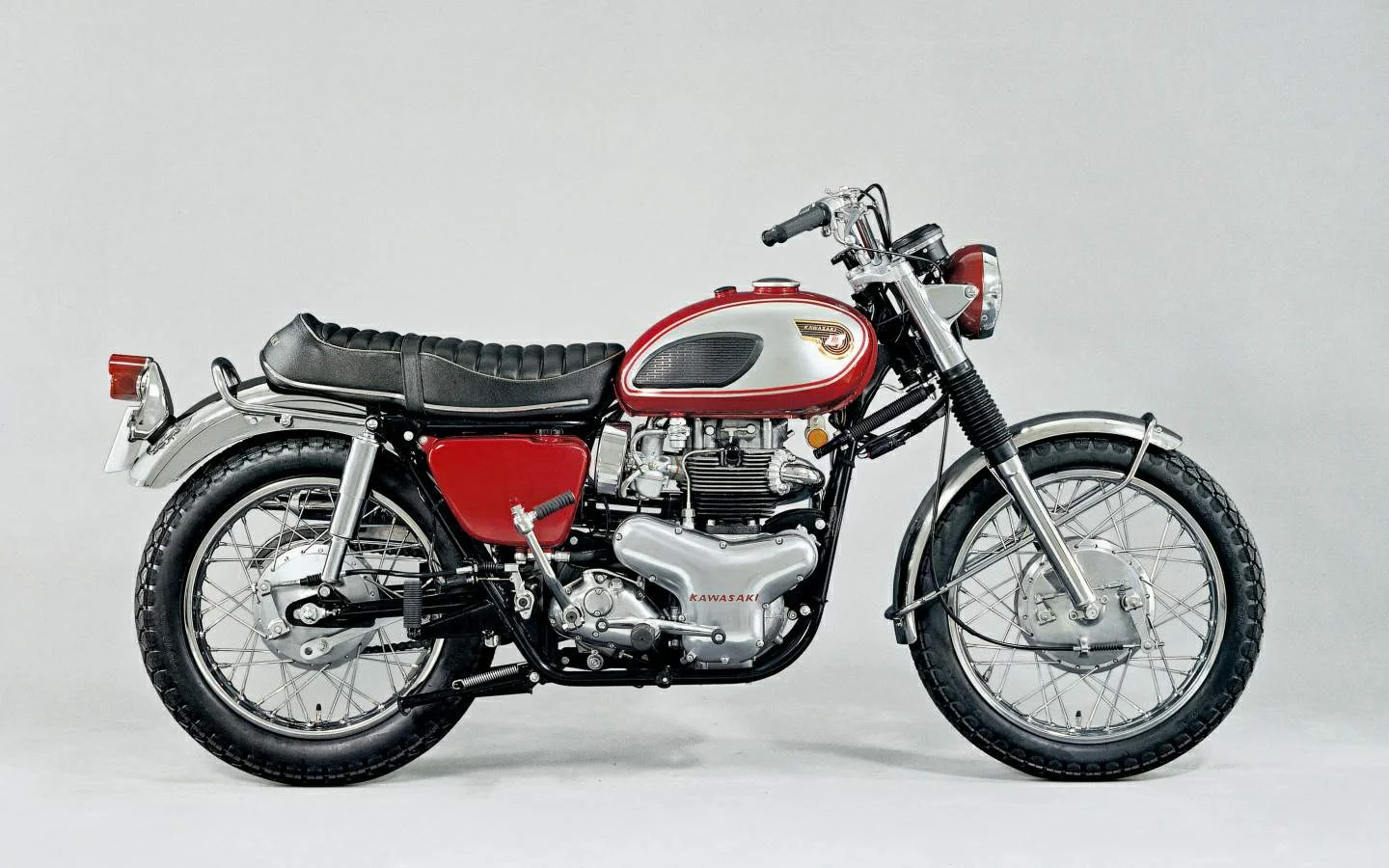
Kawasaki A 1 Samurai
1968

1968
The 1968 Kawasaki A1 Samurai arrived on the scene as a potent entry in the burgeoning 250cc motorcycle market. Following in the footsteps of Kawasaki's earlier two-stroke twins, the Samurai aimed to offer a sportier and more refined riding experience. It directly challenged models like the Yamaha YDS-5, which also offered a similar displacement and two-stroke performance characteristics.
At the heart of the A1 Samurai lies its engine: a 247.0 ccm (15.07 cubic inches) twin-cylinder, two-stroke powerhouse. This engine was meticulously engineered to produce a respectable 31.0 HP (22.6 kW) at 8000 RPM. The motorcycle's relatively low weight of 145.0 kg (319.7 pounds) contributed to its brisk acceleration and nimble handling. The two-stroke configuration gave it a distinctive sound and power delivery that was favored by riders seeking a responsive machine.
Riding the A1 Samurai offered a classic motorcycle experience. The riding position leaned slightly forward, suggesting a sporty intention. While not featuring track-focused ergonomics like rearset pegs, the Samurai provided a comfortable enough stance for spirited riding. The suspension, while basic by modern standards, did a reasonable job of absorbing bumps in the road. The light weight made it easy to maneuver in urban environments and carve through winding roads.
The Kawasaki A1 Samurai was targeted towards riders seeking a fun and affordable motorcycle. It appealed to those who appreciated the simplicity and raw feel of a two-stroke engine. It was also a good option for riders who wanted a lightweight and agile machine without the bulk of larger displacement motorcycles. While not the most practical choice for long-distance touring, the A1 Samurai offered a rewarding riding experience for shorter trips and spirited weekend rides, making it a classic example of a fun, mid-sized motorcycle from the late 1960s.
✅ Why buy this bike?
• Lightweight and nimble handling makes it incredibly fun and responsive, especially in urban environments and twisty roads. • The rotary valve two-stroke engine delivers a surprisingly potent power-to-weight ratio, offering brisk acceleration for its class. • Simple mechanical design makes it relatively easy to maintain and repair, appealing to home mechanics with basic tools. • Classic 1960s styling provides a unique and aesthetically pleasing vintage riding experience, turning heads wherever it goes. • Relatively affordable compared to other classic motorcycles, making it an accessible entry point into vintage bike ownership. • The rotary valve design contributes to smooth and consistent power delivery compared to some piston-port two-strokes.⚠️ Things to consider
• Two-stroke engine requires pre-mixing oil with fuel, adding a step to refueling and potential for incorrect mixing. • Vintage electrical system can be unreliable, requiring regular maintenance and potentially limiting nighttime riding. • Limited availability of original parts can make restoration and repair challenging, requiring sourcing from specialized vendors. • Braking performance is subpar compared to modern motorcycles, demanding careful anticipation and increased stopping distances. • The two-stroke engine's emissions are significantly higher than modern bikes, contributing to air pollution.The Kawasaki A 1 Samurai produces 31 HP, fitting A2 license limits (max 35 kW / 47 HP). For riders 18+.
Estimated average for 247cc class: 55-80 mpg (3.0-4.5 L/100km)
Insurance grouping for Kawasaki A 1 Samurai (247cc):
Personalised premium estimate for the Kawasaki A 1 Samurai (UK rates):
💡 Estimate based on UK market averages. For real quotes, compare on Compare the Market, MoneySuperMarket, GoCompare.
Find new and used Kawasaki A 1 Samurai 1968 listings:
💡 Third-party listings. MotoBike Info is informational only.
No comments yet. Be the first to write one!