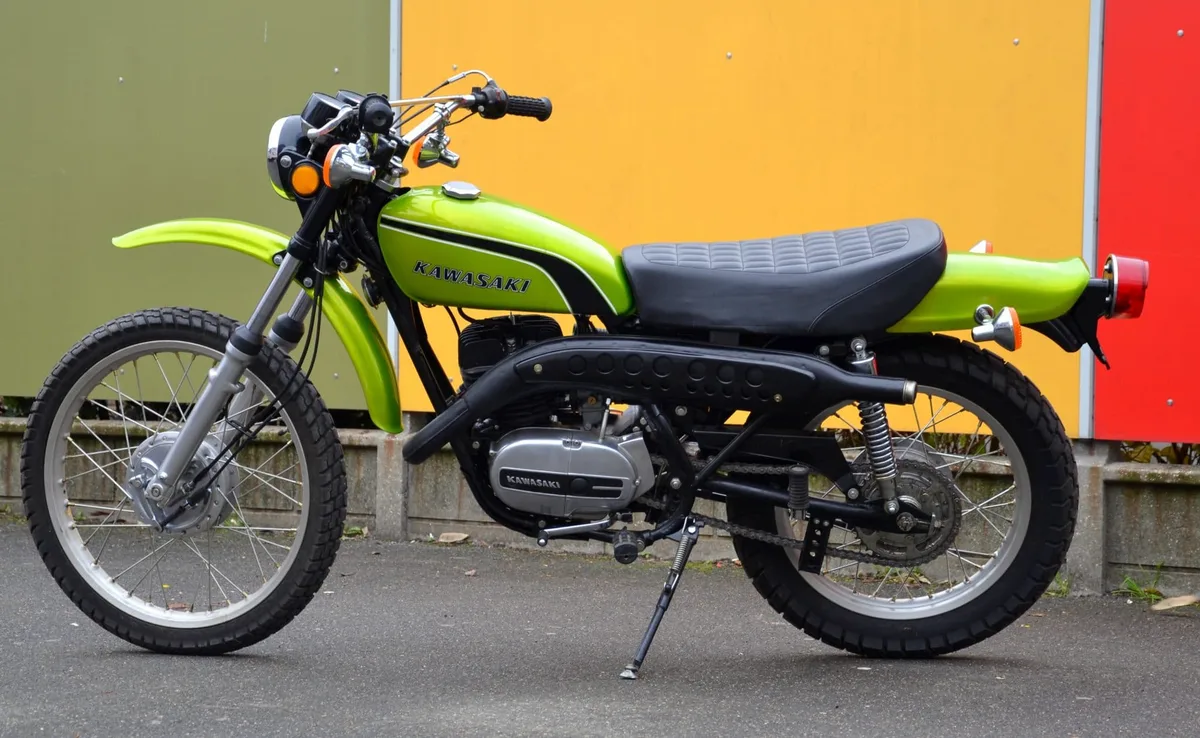
The Kawasaki 250B, emerging in the mid-1970s, represented a significant offering in the competitive 250cc two-stroke market. This era was a golden age for lightweight, nimble motorcycles, and the 250B carved its niche within Kawasaki's broader lineup of smaller-displacement machines. It faced direct competition from models like the Yamaha RD250 and Suzuki GT250, all vying for riders seeking accessible and spirited two-wheeled transport. The 250B built upon Kawasaki's reputation for producing potent two-stroke engines, offering a compelling package for its time.
At the heart of the 250B was its 250.0 ccm (15.26 cubic inches) single-cylinder, two-stroke engine. This powerplant, characteristic of its era, delivered a punchy output for its size. The motorcycle tipped the scales at a relatively light 119.7 kg (264.0 pounds), contributing to its agile feel. Fuel capacity was rated at 9.46 litres (2.50 US gallons), providing a decent range for daily commutes and weekend rides. The simplicity of the two-stroke design meant a direct power delivery, often accompanied by the distinctive sound and smell that enthusiasts appreciate.
Riding characteristics of the 250B leaned towards a practical yet engaging experience. Its light weight and compact dimensions made it highly maneuverable, particularly in urban environments. The upright stance provided a comfortable riding position, suitable for a variety of rider heights and experience levels. While not a dedicated sportbike, its spirited engine encouraged an active riding style, with its two-stroke nature rewarding riders who kept the engine in its powerband. The suspension setup was designed for general road use, offering a reasonable balance between comfort and handling.
The Kawasaki 250B was primarily aimed at riders seeking an affordable, reliable, and fun quarter-liter motorcycle. It appealed to new riders due to its manageable power and weight, as well as experienced riders looking for a nimble machine for commuting or spirited weekend jaunts. Its straightforward mechanics and robust construction contributed to its appeal as a practical daily rider. Ultimately, the 250B offered a solid, no-nonsense two-stroke experience that resonated with a broad segment of the motorcycle market in the 1970s.
✅ Why buy this bike?
• Lightweight and nimble, offering excellent maneuverability for urban commuting and tight turns. • Fuel-efficient 250cc engine provides economical transportation, ideal for daily riders. • Accessible seat height and manageable power make it a great entry-level motorcycle for new riders. • Reliable Kawasaki engineering ensures good longevity and readily available parts for maintenance. • Lower insurance premiums compared to larger displacement motorcycles, saving on ownership costs. • Relatively low purchase price makes it an affordable option for budget-conscious buyers.⚠️ Things to consider
• Limited power output struggles on highways, especially with a passenger or at higher speeds. • Smaller fuel tank necessitates more frequent stops on longer journeys compared to larger bikes. • Basic suspension and braking components offer less performance and comfort than premium models. • Minimal wind protection can be fatiguing on extended rides at highway speeds. • Resale value may be lower than more popular or higher-displacement Kawasaki models.Rule of thumb: under 125cc / 15HP → A1, under 47HP → A2, above → A.
Manufacturer-quoted consumption: 4.70 litres/100 km (21.3 km/l or 50.05 mpg).
⛽ Tank: 9.46 litres (2.50 US gallons)
Insurance grouping for Kawasaki 250B (250cc):
Personalised premium estimate for the Kawasaki 250B (UK rates):
💡 Estimate based on UK market averages. For real quotes, compare on Compare the Market, MoneySuperMarket, GoCompare.
Estimated price range for the Kawasaki 250B based on comparable motorcycles:
📊 average of 47 similar motorcycles · Approximate (USD)
Find new and used Kawasaki 250B listings:
💡 Third-party listings. MotoBike Info is informational only.
No comments yet. Be the first to write one!