✦ Published
Yamaha 175
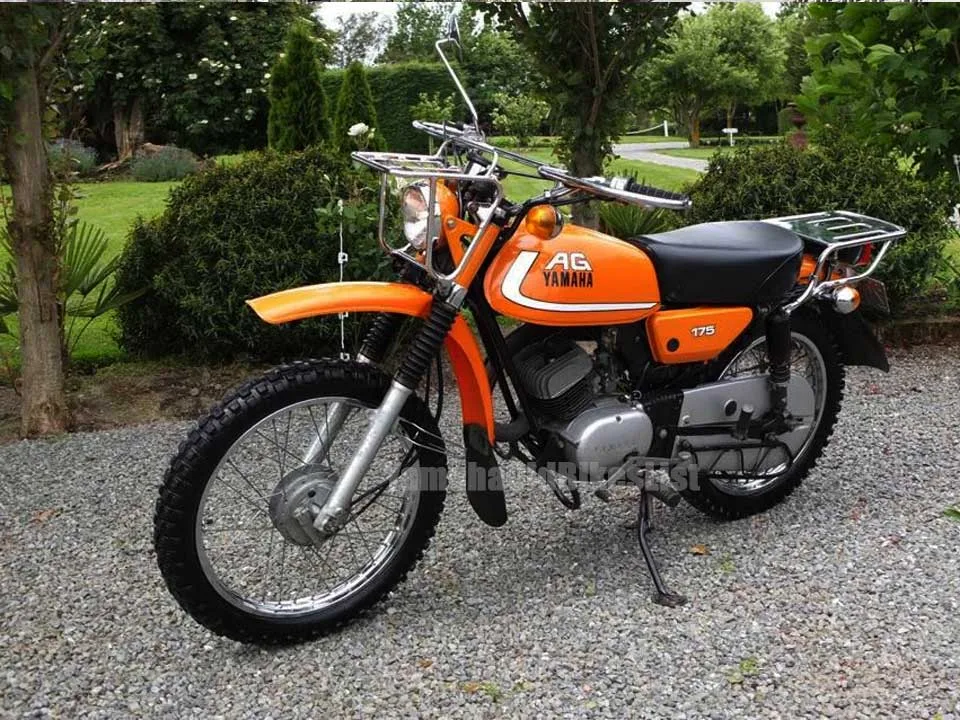
The Yamaha 175, a prominent offering from the Japanese manufacturer, carved its niche in the light-middleweight motorcycle segment during its production run. While specific year ranges saw various iterations, it generally competed with models like the Suzuki TS185 and Kawasaki F9 Big Horn, providing a versatile option for riders seeking an accessible yet capable machine. Its lineage often placed it as a step up from smaller 125cc bikes, bridging the gap to larger displacement motorcycles with a reputation for reliability and straightforward design.
At its core, the Yamaha 175 was powered by a 175.0 ccm (10.68 cubic inches) engine. This single-cylinder, two-stroke power plant was known for its lively character and relatively simple maintenance. The two-stroke design, characteristic of many motorcycles of its era, offered a punchy power delivery in the mid-range, making it responsive for its displacement. While not built for outright speed, the engine provided sufficient power for commuting, light trail riding, and general recreational use, embodying the utility and fun associated with two-stroke engines.
Riding characteristics of the Yamaha 175 typically leaned towards a comfortable, upright stance, making it approachable for a wide range of riders. Depending on the specific model (e.g., street, enduro), ergonomics could vary slightly, but generally prioritized rider comfort over aggressive sport riding positions. Its relatively light weight contributed to agile handling, allowing for easy maneuverability through traffic or on less-demanding off-road trails. The suspension, while not overly sophisticated, was adequate for absorbing road imperfections and providing a stable ride.
The Yamaha 175 was well-suited for a target audience including new riders, commuters, and those seeking an economical and dependable motorcycle for general transportation or light recreational use. Its ease of maintenance, coupled with the robust nature of its two-stroke engine, made it a practical choice. Ultimately, the Yamaha 175 delivered a no-frills, honest riding experience, cementing its place as a reliable and enjoyable machine for its intended purpose.
✅ Why buy this bike?
• Lightweight and nimble, making it excellent for navigating tight trails and urban traffic with ease. • Reliable and relatively simple two-stroke engine design, facilitating straightforward maintenance and repairs. • Good power-to-weight ratio for a 175cc, offering surprisingly peppy acceleration for its class. • Fuel-efficient for its era and type, making it an economical choice for daily commuting or trail riding. • Often more affordable to purchase and insure compared to larger displacement motorcycles. • Easy to learn on for new riders due to its manageable power and lightweight nature.⚠️ Things to consider
• Two-stroke engine requires oil pre-mix, which can be inconvenient and messier than four-strokes. • Limited top speed and highway performance, making long-distance touring uncomfortable or impractical. • Emits more pollutants and noise compared to modern four-stroke engines, especially in urban areas. • Vibration levels can be noticeable at higher RPMs, leading to rider fatigue on longer rides. • Finding parts for older models can become challenging as they age, especially for specific components.Rule of thumb: under 125cc / 15HP → A1, under 47HP → A2, above → A.
Estimated average for 175cc class: 55-80 mpg (3.0-4.5 L/100km)
Insurance grouping for Yamaha 175 (175cc):
Personalised premium estimate for the Yamaha 175 (UK rates):
💡 Estimate based on UK market averages. For real quotes, compare on Compare the Market, MoneySuperMarket, GoCompare.
Estimated price range for the Yamaha 175 based on comparable motorcycles:
📊 average of 107 similar motorcycles · Approximate (USD)
Find new and used Yamaha 175 listings:
💡 Third-party listings. MotoBike Info is informational only.
No comments yet. Be the first to write one!