✦ Published
Beta RR X-Pro 2 T 200
2025

2025
The off-road world is buzzing with anticipation for the 2025 Beta RR X-Pro 2 T 200. Beta, renowned for its dedication to purpose-built enduro machines, is poised to deliver a motorcycle that embodies the brand's core values. While full 2025 specifications are still under wraps, the RR X-Pro 2 T 200 is already shaping up to be a serious contender in a fiercely competitive segment, one populated by established players like the KTM EXC range and Husqvarna's TE models.
At the heart of the Beta RR X-Pro 2 T 200 lies a 2-stroke, 200cc engine. While we await concrete power figures, Beta's extensive experience in crafting high-performance 2-stroke engines suggests that this powerplant will offer a potent and usable power delivery. Expect a responsive low-end torque curve perfect for navigating technical terrain, transitioning into a strong mid-range pull and a willingness to rev out when needed. The engine’s character will likely favor a playful and engaging riding experience, rewarding rider input and providing ample power for tackling challenging obstacles. The 2025 specifications will undoubtedly reveal further details about the engine's tuning and technological advancements, but the fundamentals point towards a strong and capable performer.
Beta motorcycles are known for their rider-focused ergonomics and the RR X-Pro 2 T 200 is expected to continue this trend. A comfortable riding position is crucial for long days in the saddle, and Beta typically prioritizes a slim profile, allowing for easy rider movement and control. Seat height and overall weight are critical considerations for enduro bikes. Beta will likely aim for a competitive weight figure, enhancing maneuverability in tight, technical sections. The suspension setup, although details are scarce, will be tuned for optimal off-road performance, providing a balance of plushness for absorbing bumps and firmness for maintaining control during aggressive riding. We anticipate a motorcycle that inspires confidence and allows riders to push their limits.
Beta consistently delivers motorcycles with a purposeful aesthetic and high-quality components. The RR X-Pro 2 T 200 will likely feature a modern and aggressive design, reflecting its off-road intentions. Expect durable plastics, a robust frame, and quality hardware throughout. Fit and finish are typically excellent on Beta models, showcasing the brand's commitment to craftsmanship. Attention to detail, such as well-routed cables and thoughtfully placed components, contribute to the overall impression of a well-engineered and reliable machine.
The Beta RR X-Pro 2 T 200 is poised to be a compelling option for experienced enduro riders and ambitious off-road enthusiasts. Its compact engine and expected agile handling make it a great choice for navigating tight trails and technical terrain. If the 2025 specifications confirm a competitive power output and a well-balanced chassis, this motorcycle could be a serious contender against the likes of the Sherco 250 SE Factory. The RR X-Pro 2 T 200 is ideal for riders seeking a responsive, capable, and engaging 2-stroke enduro machine that excels in challenging off-road environments. Keep an eye out for the full 2025 specifications to see if this Beta lives up to the hype!
✅ Why buy this bike?
* Exceptionally lightweight and nimble handling, ideal for tight trails and technical riding due to its expected low weight (assuming a 200cc 2-stroke). * Responsive 200cc 2-stroke engine (based on similar Beta models) provides ample power for challenging terrain and playful riding. * High-quality suspension components (assuming Beta's typical standard) offer excellent damping and control over rough surfaces. * Hydraulic clutch (likely standard) provides a light and consistent clutch feel, reducing rider fatigue. * Compact dimensions and narrow profile allow for easy maneuverability through obstacles and tight spaces.⚠️ Things to consider
* 2-stroke engine requires premixing fuel and oil, adding complexity compared to 4-strokes. * 2-stroke engine may produce more emissions and require more frequent maintenance than a 4-stroke equivalent. * Lacks the low-end torque of a larger displacement 4-stroke, requiring more clutch work in technical sections. * May not be suitable for long-distance riding or high-speed pavement sections due to its off-road focus and potential lack of comfort features.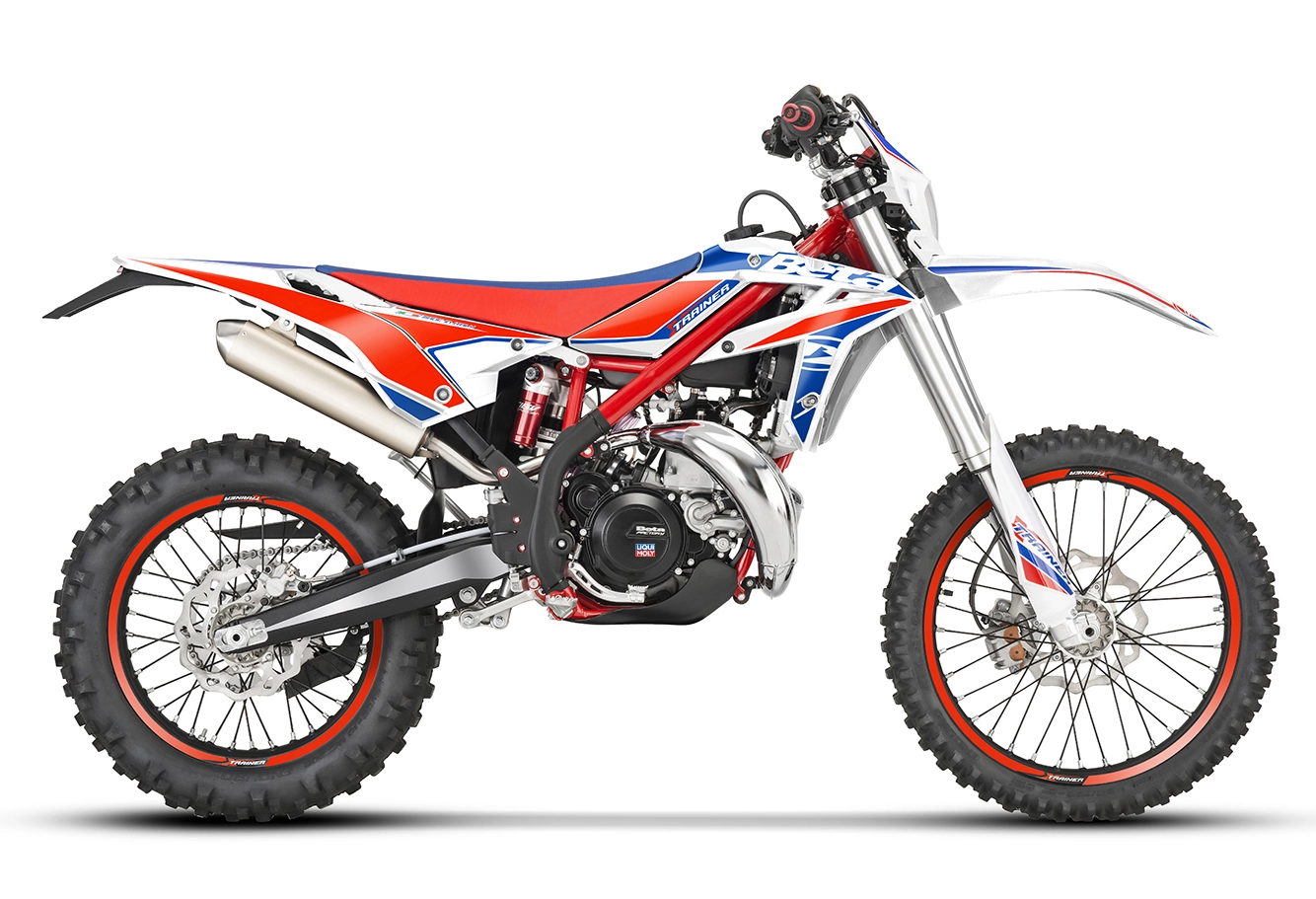
No comments yet. Be the first to write one!