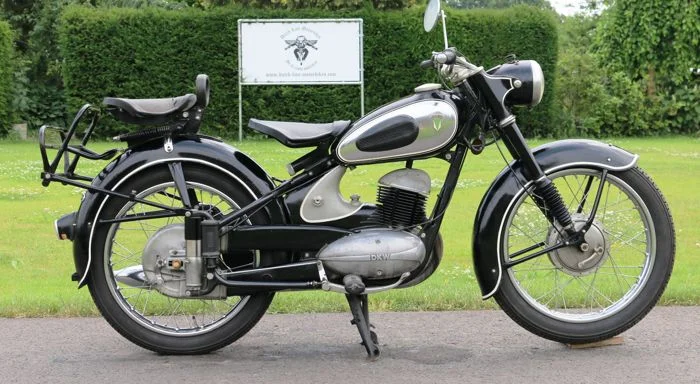
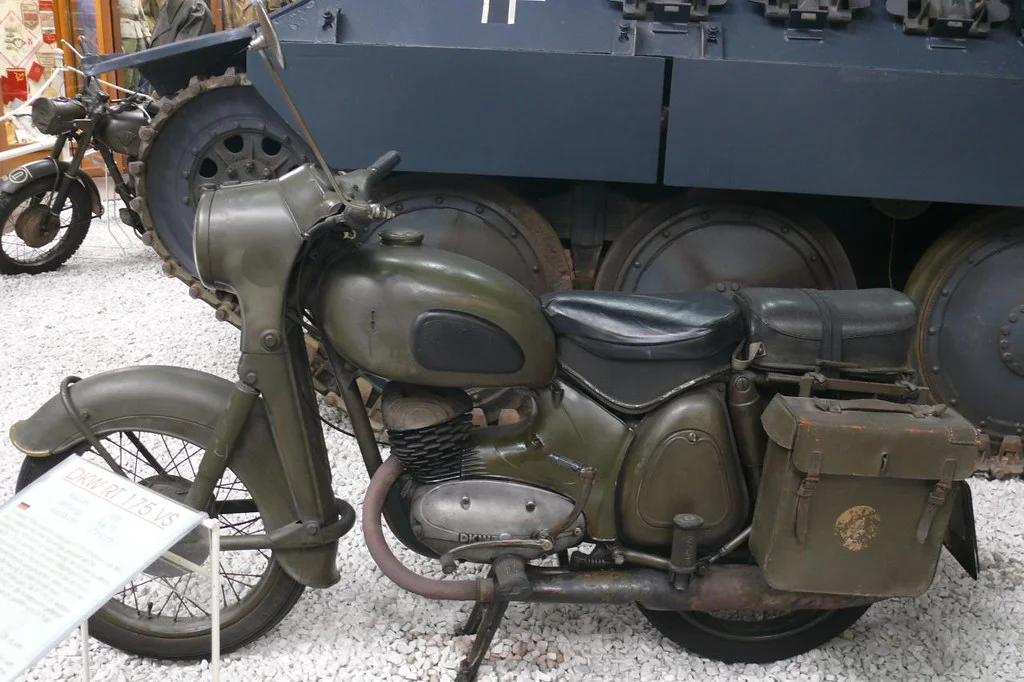
The 1940 DKW NZ 500 shares its DNA with the 1941 model, offering a similar blend of dependable performance and utilitarian design. Powered by a 489cc single-cylinder engine producing 18.5 horsepower, it's designed for steady, reliable power delivery rather than outright speed. Reaching a top speed of 115 km/h, it was a practical machine for its time. The bike's 195 kg weight contributes to its stability, though it wouldn't offer the agility of lighter, more modern motorcycles. The drum brakes reflect the standard braking technology of the era.
Like its successor, the ergonomics of the 1940 NZ 500 likely prioritize rider comfort for extended periods. An upright riding position and a relatively flat seat suggest a focus on practicality and ease of use. The controls are basic and functional, aligning with the minimalist design ethos of the time. This motorcycle would have been targeted at individuals needing a reliable mode of transport for both everyday use and potentially light-duty work.
As a vintage machine, the 1940 DKW NZ 500 provides a tangible link to the past. Its simple mechanics and rugged construction make it an interesting subject for collectors and enthusiasts interested in the history of motorcycling. It's a testament to the engineering priorities of the pre-war era, emphasizing durability and functionality over high performance.

No comments yet. Be the first to write one!