✦ publish
Honda CB 77 Super Hawk
1965

1965
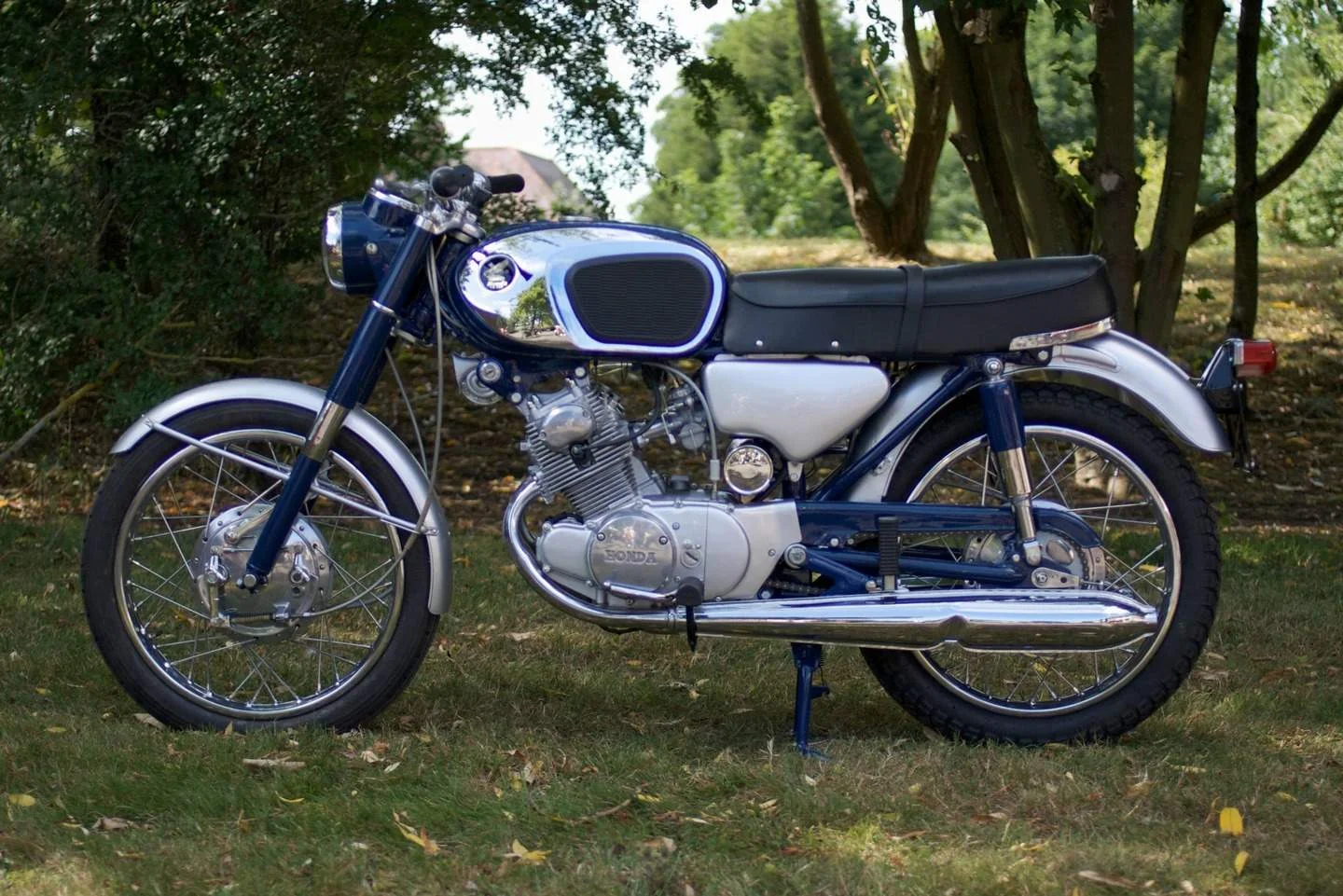
The 1965 Honda CB77 Super Hawk marked a significant moment for Honda and motorcycling in general. Building upon the success of earlier CB models, the Super Hawk aimed to offer a sportier and more capable machine. It directly competed with established British motorcycles of the time, such as the Triumph Bonneville, seeking to establish Honda as a serious player in the larger displacement motorcycle market.
At the heart of the CB77 Super Hawk was its 305.0 ccm (18.61 cubic inches) parallel-twin engine. This powerplant produced a respectable 28.5 HP (20.8 kW) at a high 9000 RPM. This allowed the motorcycle to achieve a top speed of 168.3 km/h (104.6 mph), impressive for its class. Despite its performance, the CB77 remained relatively lightweight at 159.0 kg (350.5 pounds). With a fuel capacity of 14.00 litres (3.70 US gallons), riders could enjoy extended journeys before needing to refuel.
The riding experience on the CB77 is characterized by its nimble handling and responsive engine. While not a track-focused machine, its sporty design provided a fun and engaging ride. The seat height of 760 mm (29.9 inches) (lowest setting, if adjustable) made it accessible to a wide range of riders. The rider sits in a slightly forward-leaning position, but the ergonomics are generally comfortable for shorter rides.
The 1965 Honda CB77 Super Hawk appealed to riders seeking a motorcycle that was both sporty and reliable. It was a good choice for daily commuting or weekend rides. Its combination of performance, manageable weight, and Honda build quality made it a popular choice. The CB77 helped establish Honda's reputation for producing high-quality motorcycles and remains a desirable classic today.
✅ Why buy this bike?
• The CB77's parallel-twin engine is known for its smooth power delivery and reliable performance, making it enjoyable for various riding conditions. • Its relatively lightweight chassis and responsive handling make it a nimble and fun motorcycle to ride, especially on twisty roads. • The CB77's classic design and styling contribute to its iconic status, making it a desirable vintage motorcycle for collectors and enthusiasts. • Parts availability, while not as plentiful as newer bikes, is still reasonably good due to its popularity and historical significance. • The CB77's simple mechanical design allows for relatively easy maintenance and repairs, especially for those familiar with vintage motorcycles. • The CB77 offers a direct and engaging riding experience, free from the electronic aids found on modern motorcycles, appealing to purists.⚠️ Things to consider
• The drum brakes, while adequate for the era, lack the stopping power of modern disc brakes, requiring more anticipation and careful braking. • The electrical system, being from the 1960s, can be prone to issues such as weak charging and unreliable lighting, requiring careful maintenance. • The CB77's suspension, while decent for its time, is less sophisticated than modern suspensions, resulting in a less comfortable ride on rough roads. • Finding qualified mechanics with experience working on vintage motorcycles like the CB77 can be challenging in some areas. • The CB77's 305cc engine, while capable, may feel underpowered compared to modern motorcycles, particularly when carrying a passenger or luggage.The Honda CB 77 Super Hawk produces 28 HP, fitting A2 license limits (max 35 kW / 47 HP). For riders 18+.
Estimated average for 305cc class: 45-60 mpg (4.0-5.5 L/100km)
⛽ Tank: 14.00 litres (3.70 US gallons)
Insurance grouping for Honda CB 77 Super Hawk (305cc):
Personalised premium estimate for the Honda CB 77 Super Hawk (UK rates):
💡 Estimate based on UK market averages. For real quotes, compare on Compare the Market, MoneySuperMarket, GoCompare.
Find new and used Honda CB 77 Super Hawk 1965 listings:
💡 Third-party listings. MotoBike Info is informational only.
No comments yet. Be the first to write one!