✦ publish
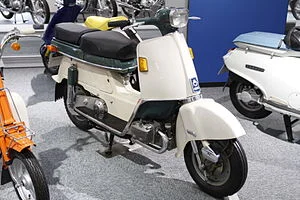
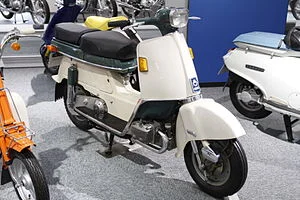
Honda Juno M 85
1961

1961
The 1961 Honda Juno M85 was a bold experiment in scooter design from a company rapidly expanding its motorcycle offerings. Positioned as a premium scooter, it aimed to attract buyers looking for more than just basic transportation. In a market dominated by simpler designs, the Juno M85 faced direct competition from European scooters like the Vespa 150 and Lambretta Li 150 series, which offered a more established aesthetic and a broader range of aftermarket support.
At the heart of the Juno M85 was a 169.0 ccm (10.31 cubic inches) single-cylinder, four-stroke engine. This powerplant generated a modest but usable 12.0 HP (8.8 kW) at 7600 RPM. Considering the scooter's weight of 157.0 kg (346.1 pounds), the power-to-weight ratio prioritized fuel efficiency and ease of use over outright speed. The engine was designed for smooth operation and reliability, crucial factors for its intended commuter role.
The Juno M85 offered a comfortable riding experience for its time. Its enclosed bodywork provided better weather protection than many contemporary motorcycles, and the seating position was upright and relaxed. The scooter's suspension was designed to absorb bumps and provide a smooth ride on typical road surfaces. While not a performance machine, the Juno M85 prioritized practicality and rider comfort for daily use.
The Honda Juno M85 targeted a specific demographic: affluent commuters and style-conscious riders seeking a sophisticated and practical alternative to traditional motorcycles. While innovative for its time, its complexity and higher price point limited its market appeal. Ultimately, the Juno M85 is remembered as an ambitious, albeit short-lived, attempt to redefine the scooter market, showcasing Honda's willingness to experiment with new designs and technologies, paving the way for future successes.
✅ Why buy this bike?
• Innovative styling for its time, featuring fully enclosed bodywork and a distinctive front fairing, offering weather protection. • Early adoption of an electric starter, providing convenient and reliable starting compared to kick-start-only contemporaries. • Use of a fiberglass reinforced plastic body offered corrosion resistance, increasing longevity in varied climates. • Automatic transmission (Hydramatic) simplified operation, appealing to riders unfamiliar with manual gear shifting. • Relatively smooth ride quality due to the inline twin engine and advanced suspension for the era, enhancing rider comfort. • Unique design makes it a rare and collectible motorcycle, potentially appreciating in value for enthusiasts.⚠️ Things to consider
• Hydramatic transmission complexity leads to difficult and expensive repairs due to limited parts availability and specialized knowledge. • Fiberglass body panels are prone to cracking and damage, and replacements are scarce and costly. • Low engine displacement results in limited power and performance, unsuitable for modern highway speeds or steep inclines. • Parts availability is extremely limited, making restoration and maintenance challenging and expensive. • Unconventional design and controls can be difficult to adapt to for riders accustomed to standard motorcycle configurations.The Honda Juno M 85 produces 12 HP, fitting A2 license limits (max 35 kW / 47 HP). For riders 18+.
Estimated average for 169cc class: 55-80 mpg (3.0-4.5 L/100km)
Insurance grouping for Honda Juno M 85 (169cc):
Personalised premium estimate for the Honda Juno M 85 (UK rates):
💡 Estimate based on UK market averages. For real quotes, compare on Compare the Market, MoneySuperMarket, GoCompare.
Find new and used Honda Juno M 85 1961 listings:
💡 Third-party listings. MotoBike Info is informational only.
No comments yet. Be the first to write one!