✦ publish
Honda PX 50
1981

1981
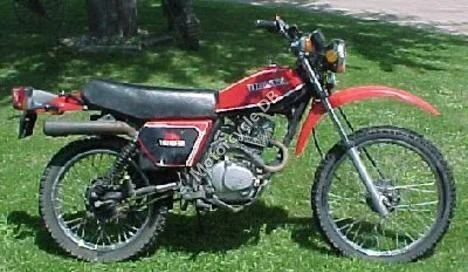
The 1981 Honda PX 50 represents a charming entry into the fiercely competitive 50cc moped market of its era. Emerging from Honda's extensive two-wheeled heritage, the PX 50 was designed to offer accessible, economical personal transport. It slotted into a lineage of small-displacement machines that prioritized practicality and ease of use, a tradition Honda had long upheld. In its time, it faced direct competition from popular models like the Yamaha QT50 and the Suzuki FA50, all vying for the attention of new riders and urban commuters seeking a no-frills, reliable ride.
At the heart of the PX 50 was its modest yet capable 49.4 ccm (3.01 cubic inches) single-cylinder, two-stroke engine. This simple power plant produced a functional 2.6 HP (1.9 kW) at 5000 RPM, sufficient for navigating city streets and suburban lanes. Torque figures stood at 4.8 Nm (0.5 kgf-m or 3.5 ft.lbs) peaking at a low 3500 RPM, ensuring decent pull from a standstill. Weighing in at a featherlight 60.0 kg (132.3 pounds), the PX 50 was exceptionally easy to handle and maneuver. Its fuel tank held 3.50 litres (0.92 US gallons), providing a practical range for daily errands without frequent stops at the pump.
Riding characteristics of the PX 50 were defined by its lightweight nature and user-friendly design. With its upright stance and low seat height, it offered a comfortable and confidence-inspiring position for riders of varying statures. The simple suspension and small wheels were optimized for urban environments, absorbing minor road imperfections adequately. Its moped classification meant straightforward controls, often featuring an automatic transmission, which further simplified the riding experience. The lack of excessive power meant a predictable and unintimidating throttle response, making it an ideal choice for those new to motorcycling or preferring a relaxed pace.
The Honda PX 50 was primarily aimed at a demographic seeking economical, reliable, and straightforward transportation. This included younger riders just starting out, urban dwellers needing a nimble way to commute, or anyone looking for a secondary vehicle for short trips. Its low running costs, ease of maintenance, and Honda's reputation for dependability made it a compelling choice. The PX 50 wasn't about speed or flash; it was about getting from A to B with minimal fuss, embodying the essence of practical, accessible two-wheeled mobility for the masses.
✅ Why buy this bike?
• Extremely lightweight and nimble, perfect for navigating congested urban environments with ease. • Exceptional fuel economy for its era, making it very cheap to run daily for commuting. • Simple two-stroke engine design means relatively easy and inexpensive basic maintenance and repairs. • Low seat height and approachable power delivery make it an ideal first motorcycle for new riders. • Reliable Honda engineering, even for a small scooter, often ensures long-term durability with proper care.⚠️ Things to consider
• Very limited top speed and acceleration, struggling on anything but flat city streets. • Small wheels and basic suspension offer a harsh ride, especially over rougher pavement. • Drum brakes all around provide adequate stopping power but lack the feel and performance of discs. • Two-stroke engine requires mixing oil with gasoline, an extra step and potential for smoke. • Limited carrying capacity and passenger comfort, primarily designed for single-rider urban use.The Honda PX 50, with its 49 cc engine and 3 HP, qualifies for an A1 license. Riders 16+ can ride it.
Estimated average for 49cc class: 75-100 mpg (2.5-3.5 L/100km)
⛽ Tank: 3.50 litres (0.92 US gallons)
Insurance grouping for Honda PX 50 (49cc):
Personalised premium estimate for the Honda PX 50 (UK rates):
💡 Estimate based on UK market averages. For real quotes, compare on Compare the Market, MoneySuperMarket, GoCompare.
Find new and used Honda PX 50 1981 listings:
💡 Third-party listings. MotoBike Info is informational only.
No comments yet. Be the first to write one!