✦ publish
Yamaha RD 250 (reduced effect)
1981
1981
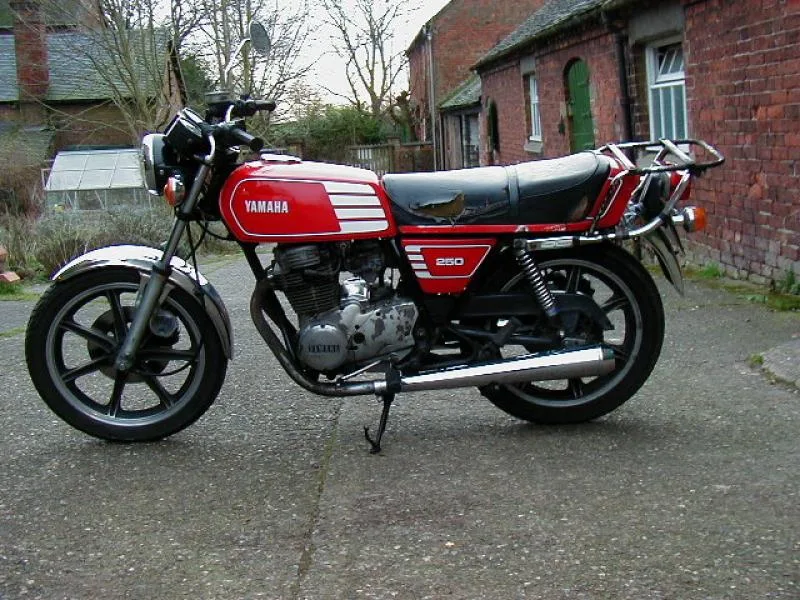
The 1981 Yamaha RD 250 represents a significant point in the lineage of two-stroke sportbikes, a final iteration before the market shifted dramatically. Emerging from a long line of successful RD models, the '81 quarter-liter machine continued Yamaha's reputation for potent yet accessible performance. In its era, it squared off directly against rivals like the Kawasaki KH250 and Suzuki GT250, all vying for supremacy in the highly competitive 250cc two-stroke segment. It was a motorcycle designed for riders who appreciated the distinct character and direct power delivery of a two-stroke engine.
At its heart, the RD 250 housed a 247.0 ccm (15.07 cubic inches) two-stroke engine, known for its lively power band and characteristic exhaust note. This powerplant propelled the bike to a respectable top speed of 149.0 km/h (92.6 mph), a notable figure for a 250cc machine of the time. Fueling this eager engine was a tank with a capacity of 17.00 litres (4.49 US gallons), offering a decent range for spirited rides. The engine's design emphasized responsive acceleration, a hallmark of Yamaha's two-stroke philosophy.
Riding the RD 250 offered a distinctive experience. Its ergonomics were geared towards a sportier posture, though not as aggressive as later track-focused machines. The seating position provided a good balance between control and comfort for a variety of journeys. Riders could expect a relatively light and agile chassis, making it responsive to steering inputs. The suspension, while not overly sophisticated by modern standards, was competent for the bike's intended use, handling typical road imperfections adequately and providing a stable ride.
The 1981 Yamaha RD 250 was aimed at a diverse audience, from new riders seeking an engaging entry into motorcycling to experienced enthusiasts who appreciated the raw appeal of a two-stroke. Its relatively straightforward mechanics and engaging performance made it a popular choice. For those seeking a motorcycle with a distinct character and a direct connection to the road, the RD 250 delivered a memorable experience, solidifying its place in the history of two-stroke motorcycles.
✅ Why buy this bike?
• Lightweight and agile chassis offered responsive handling, making it a joy on twisty roads. • Two-stroke engine delivered a surprisingly strong powerband for its displacement, especially in the mid-range. • Classic two-stroke sound and smell provided an authentic, nostalgic riding experience many enthusiasts seek. • Relatively simple mechanical design made home maintenance and repairs more accessible for DIYers. • Excellent fuel economy compared to larger four-stroke bikes of the era, reducing running costs. • Distinctive styling with its angular lines and iconic 'coffin' tank makes it a head-turner and collectible.⚠️ Things to consider
• Two-stroke engine required pre-mixing oil with fuel or relying on an autolube system, adding complexity. • Limited low-end torque meant frequent gear changes were necessary to stay within the powerband. • Emissions were significantly higher than contemporary four-stroke engines, a concern for modern riders. • Vibration from the two-stroke parallel twin could be noticeable, especially at higher RPMs. • Brakes, while adequate for the time, are less powerful and refined than modern motorcycle braking systems.Rule of thumb: under 125cc / 15HP → A1, under 47HP → A2, above → A.
Estimated average for 247cc class: 55-80 mpg (3.0-4.5 L/100km)
⛽ Tank: 17.00 litres (4.49 US gallons)
Insurance grouping for Yamaha RD 250 (reduced effect) (247cc):
Personalised premium estimate for the Yamaha RD 250 (reduced effect) (UK rates):
💡 Estimate based on UK market averages. For real quotes, compare on Compare the Market, MoneySuperMarket, GoCompare.
Find new and used Yamaha RD 250 (reduced effect) 1981 listings:
💡 Third-party listings. MotoBike Info is informational only.

No comments yet. Be the first to write one!